
Large scale farm carbon footprinting is not yet in place in the UK, and since 2022 we have been working with Promar and Agrecalc on a project known as Activate UK, to measure emissions from farming enterprises which represent 9% and 11% of our beef and lamb volumes, respectively. Farm carbon footprints are undertaken every 18-24 months and farmers receive feedback reports explaining their emissions hotspots, along with recommended actions and practice changes to reduce emissions. Such recommendations are aligned with the Teagasc Marginal Abatement Cost Curve and based on each farms’ bespoke enterprise and risk appetite.

Goal
To drive measurable improvements in on-farm sustainability and accelerate climate action by providing farms with the quality data, tools, benchmarking insights and bespoke advice needed to improve sustainability and productivity.
Progress
During Round One, Promar collected data from 2021-2022 from 487 farming enterprises, and during Round Two collected data from 2023-2025 from 631 enterprises, which have been used to calculate weighted average emission factors, which in turn are used to calculate our business’ baseline and 2025 value chain carbon footprints.
The tables show the simple average carbon footprints by beef and lamb enterprise type from Round two when compared to the AHDB national averages. The AHDB figures were calculated using Agrecalc data from 2018-2022, which yielded the results.
The results have helped us to:
- Establish key emission sources from a representative proportion of farmer suppliers track changes in farm carbon footprints over time
- identify external factors impacting farm carbon footprints, such as market forces, farm gate prices, input costs, weather conditions, disease and agricultural policy.

Top Recommendations for Activate UK Farms from Round Two
The top recommendations for Activate UK Farms from Round Two, as provided by Promar Farm Advisors, are detailed below. Each Activate UK Farm received bespoke information and guidance which focused on specific topics. Additionally, we provided data to support farms in monitoring carcass performance and daily liveweight gain. Through Farm Green, knowledge has been shared with the wider supply base on how to complete a farm carbon footprint, what the footprint means and how actions to reduce emissions also improve farm efficiency and productivity.
Promar consultants provide farms with recommendations linked to their carbon footprint.
These recommendations are relevant to the farm system:
- Improving technical performance and efficiency
- Changing management practices
- Reducing inputs and cost saving practices
- Improving compliance or agricultural scheme eligibility
- Identifying funding opportunities
- Cost saving vs cost incurring management practices
- Short-term vs Long-term planning
- Identifying co-benefits for biodiversity, water, soils and removals
Activate UK Leaders
Activate Leaders is our programme to help support farmers reduce their carbon emissions through enhanced support both technical and financial to understand the true cost/benefit of making change on farm.
The goal of this project is to accelerate climate action by working with a range of farming enterprises in the UK to demonstrate how Net Emissions* may be reached by increasing carbon storage and reducing GHG emissions, while improving long term farm economic sustainability and profitability, water quality, soil condition and biodiversity.
* for the purposes of the projects, net emissions means total farm GHG emissions, minus carbon stored above and below ground.
Progress
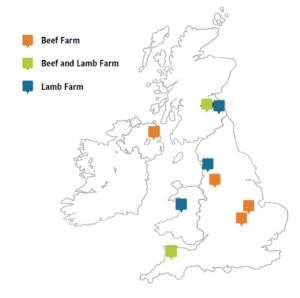
In 2025, we partnered with 9 farms, known as the Activate UK Leaders, who represent a cross section of geographic locations and farming systems.
Working with the Soil Association Exchange (SAEx), all 9 farms have undertaken their first-year baselining assessments.
Enhanced data collection and outcome monitoring includes the following metrics:

Soils
- Soil Organic Matter
- Bulk denensity
- Earthworm count
- pH
- VESS
- C:N Ratio
- Soil cover %
Carbon
- Carbon balance
- Emissions
- Sequestration in: Woodland, Individual trees, Hedgerows, Soils
Biodiversity
- Space for nature
- Connectivity
- Detailed habitat map aligned to UKHAB
- Bird species abundance
- Flora species abundance
- Crop and livestock
- Hedgerow assessment
- Habitat management score
Water
- Flood risk mitigation
- Drought risk mitigation
- Nitrogen balance
- Potash balance
- Phosphate balance
Animal Welfare
- Antibiotic usage
- Welfare outcomes
People and Society
- Land access
- Community engagement
- Food production
Farms use this baseline data for decision making, and the Soil Association Exchange and Dunbia provide support with tools, advice and expertise to establish improvement plans, and link measures and actions to sources of funding.
We will follow their journeys and disseminate knowledge via Farm Green.